The pathologist shortage crisis has an AI solution
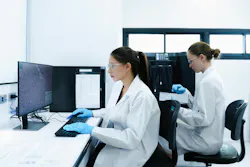
There's a growing healthcare crisis increasingly making headlines. Cancer rates continue to rise, while aging populations are placing unprecedented pressure on healthcare systems worldwide, driving growing demand for diagnostic services.1 Pathologists—the physicians who diagnose disease through tissue analysis and help guide critical treatment decisions—are being asked to support a greater volume of increasingly complex cases, while workforce capacity remains constrained and has not grown at the same pace.2
This imbalance has significant real-world consequences. Delayed diagnoses can leave patients waiting longer for critical answers and treatment decisions. At the same time, overburdened pathologists face increasing workloads that may impact both their wellbeing and diagnostic consistency, while laboratories struggle to meet turnaround expectations that continue to grow each year.3
Traditional solutions alone are unlikely to fully address the challenge. Training new pathologists requires many years of medical education and highly specialized residency training, while the profession itself faces demographic pressures similar to those affecting the broader healthcare workforce and patient population.4 Laboratory consolidation may improve efficiency in some settings, but only to a certain extent. The scale and urgency of the workforce pressures demand approaches that can deliver meaningful, scalable impact—and soon.
Addressing pathology workforce pressures through AI
Artificial intelligence (AI) has generated considerable discussion across healthcare, often accompanied by concerns that automation could replace clinical expertise.5 In pathology, however, the most impactful role of AI is not replacement, but augmentation.
AI-enabled companion or complementary diagnostics have the potential to preserve diagnostic accuracy while meaningfully reducing pathologist workload, allowing these specialists to focus their expertise on the complex cases that most require human interpretation and judgement.5 In this model, AI supports tasks such as quantification, pattern recognition, and workflow optimization, while the pathologist remains central to interpretation, clinical context, and patient decision-making.
The practical need for this support is becoming increasingly clear: as laboratories process growing volumes of slides, maintaining highly consistent interpretation across large caseloads becomes progressively more challenging. For example, scoring the same biomarker with identical precision on the hundredth slide of the day as on the first demands a level of sustained concentration that is difficult to maintain indefinitely in high-throughput clinical environments. For critical biomarkers, such as PD-L1 and HER2, which are among the most frequently used companion diagnostics in oncology, AI-enabled image analysis can improve reproducibility and reduce variability that may emerge under increasing workload pressures.6
This has direct implications for patient care. Modern oncology increasingly relies on pathology diagnostics to match patients with targeted therapies based on specific biomarker profiles. Variability in biomarker assessment can influence treatment selection and downstream clinical decisions. Standardized, reproducible analysis supports the precision medicine promise that cancer care depends upon.
The human factor deserves more attention
Conversations around AI in pathology typically focus on operational metrics such as turnaround times, throughput, and efficiency gains. While these are important, they can overshadow another critical dimension: the quality-of-life implications for pathologists themselves.
Digital pathology and AI are frequently framed as tools for operational optimization; yet one of their most meaningful benefits may be the ability to reduce the growing burden on highly specialized professionals who entered this field to improve patient care, not to be overwhelmed by ever-increasing volumes.
Today’s pathologists are practicing in an environment shaped by rising case complexity, expanding biomarker requirements, and increasing expectations for rapid turnaround times.7 At the same time, newer generations entering the profession bring different expectations around technology, workflow efficiency, and long-term career sustainability. They expect modern digital tools that support high-quality clinical practice with speed and ease.
When thoughtfully implemented, AI can help relieve pathologists of repetitive and time-intensive tasks such as manual quantification and standardized scoring. This allows more time for the areas where human expertise adds the greatest value: complex diagnostic interpretation, multidisciplinary collaboration, clinical consultation, and integration of increasingly sophisticated molecular and pathological data.
This extends beyond workplace satisfaction and speaks to a broader impact on performance, engagement, and overall organizational effectiveness. Sustainable working conditions are essential for retaining experienced pathologists whose clinical judgment, contextual reasoning, and institutional knowledge cannot be easily replaced. AI is not replacing pathology expertise but is instead helping to preserve and extend it.
From concept to clinical reality
Even the most promising technology has limited impact if it cannot be implemented effectively in real-world clinical laboratories already operating under significant capacity pressures. This is where thoughtful platform design becomes critical.
One increasingly practical model is the concept of an open, best-in-class platform, similar in principle to the app-based ecosystems widely adopted in other technologies such as smartphones. Rather than forcing laboratories to commit to closed and single-vendor environments, Leica Biosystems realizes open platforms enable institutions to access applications from multiple developers, while ensuring standardized quality and user experience. This allows them to select high-quality AI algorithms that best align with their clinical needs, workflow requirements, and existing infrastructure, thereby helping to bring the promise of AI tools to clinical scale together.
This approach is resonating across both laboratories and pharmaceutical companies. Laboratories value solutions that integrate more seamlessly into existing workflows and support scalable adoption without excessive operational disruption. Pharmaceutical companies similarly recognize that the success of targeted therapies increasingly depends on the availability of accessible, deployable pathology diagnostics in routine clinical practice. When treatment access is linked to biomarker testing, ensuring that those tests can be implemented reliably in real-world laboratories becomes a shared strategic priority.
At the same time, successful adoption requires careful navigation of the evolving regulatory landscape. Research use only (RUO) applications can play an important role in demonstrating technical performance, generating research evidence, and supporting workflow evaluation while underlying antibodies, assays, and staining protocols continue to operate within established regulatory frameworks. This measured and evidence-driven approach helps accelerate innovation while maintaining the rigor, oversight, and patient safety standards essential for clinical diagnostics.
An opportunity to shape the future of pathology
The market for AI-enabled pathology continues to grow.8 The landscape is still notably fragmented, with no dominant approach or established long-term model for adoption. While this creates uncertainty, it also presents a significant opportunity. The decisions being made today about development, validation, regulation, and implementation will help define the future of diagnostic medicine for years to come.
Successful deployment of AI-assisted cancer biomarkers in real-world clinical practice requires more than strong technical performance alone. Algorithms must be rigorously validated, while workflows must integrate seamlessly into existing laboratory systems. Implementation must support—and not complicate—the work of pathology teams which are already stretched thin on time and resources. Most importantly, the pathologist's central role in interpretation, clinical correlation, and patient care must remain at the core of these workflows.
Those of us developing these technologies carry responsibilities that extend beyond innovation and commercial considerations. The focus remains on delivering meaningful clinical utility, improving reproducibility, and expanding access to support healthcare professionals and not replace them. Ultimately, the success of AI in pathology will be measured not by the sophistication of the algorithms, but by whether these tools help patients receive faster diagnoses, more consistent results, and better-informed treatment decisions.
The pathologist workforce shortage is real, and demographic trends suggest the pressure on healthcare systems will continue to grow.2 Traditional workforce expansion alone is unlikely to fully address the gap. AI-enabled companion diagnostics and computational pathology therefore represent an important opportunity to help scale, support, and sustain the pathology workforce in an increasingly complex era of precision medicine.
The patients waiting for their diagnoses deserve nothing less.
References
- Prathap R, Kirubha S, Rajan AT, Manoharan S, Elumalai K. The increasing prevalence of cancer in the elderly: An investigation of epidemiological trends. Aging Med (Milton). 2024;7(4):516-527. doi:10.1002/agm2.12347.
- Walsh E, Orsi NM. The current troubled state of the global pathology workforce: a concise review. Diagn Pathol. 2024;19(1):163. doi:10.1186/s13000-024-01590-2.
- Carbone FG. The shrinking workforce of pathologists: implications for healthcare and possible solutions. Pathologica. 2025;117(4):449-451. doi:10.32074/1591-951X-N1156..
- Black-Schaffer WS, Morrow JS, Prystowsky MB, Steinberg JJ. Training pathology residents to practice 21st century medicine: A proposal. Acad Pathol. 2016;3:2374289516665393. doi:10.1177/2374289516665393.
- Fahim YA, Hasani IW, Kabba S, Ragab WM. Artificial intelligence in healthcare and medicine: clinical applications, therapeutic advances, and future perspectives. Eur J Med Res. 2025;30(1):848. doi:10.1186/s40001-025-03196-w.
- Yap M, Mihai IM, Wang G. Machine learning in biomarker-driven precision oncology: Automated immunohistochemistry scoring and emerging directions in genitourinary cancers. Curr Oncol. 2026;33(1):31. doi:10.3390/curroncol33010031.
- El-Khoury R, Zaatari G. The rise of AI-assisted diagnosis: Will pathologists be partners or bystanders? Diagnostics (Basel). 2025;15(18):2308. doi:10.3390/diagnostics15182308.
- AI in pathology market. MarketsandMarkets. Accessed August 7, 2026. https://www.marketsandmarkets.com/Market-Reports/ai-in-pathology-market-86647266.html.
About the Author
 Karan Arora
 Karan Arora
is the Senior Vice President of Advanced Assays, AI, and Pharma Services at Leica Biosystems. He leads a robust team of associates at Leica Biosystems, advancing precision oncology through digital pathology, AI, and spatial biology—ensuring patients receive the right treatment the first time. His career spans leadership roles across diagnostics, digital health, and pharmaceuticals, where he has built and scaled organizations that transform the way healthcare is delivered worldwide. Previously at Beckman Coulter, Karan led enterprise strategy, marketing, and market access to accelerate growth. As Chief Commercial Digital Officer at AstraZeneca, he pioneered digital health/data strategies, advanced precision medicine, and launched *AMAZE*, a chronic disease management platform later acquired by Huma.
 Luiza Moore, MD, Phd, FRCPath
Luiza Moore, MD, Phd, FRCPath
is the Global Commercial Product Leader – AI Enabled Assays, at Leica Biosystems. She is a physician-scientist and global leader in oncology diagnostics at Leica Biosystems, focused on digital and computational pathology and the commercialization of innovative diagnostic solutions.
With more than 15 years of experience spanning clinical medicine, academia, technology, and biopharma, she brings a unique cross-sector perspective shaped by roles as a practicing pathologist, academic researcher, and industry leader across global technology organizations, health tech startups, and pharmaceutical companies. Her work is focused on advancing precision medicine through the development and real-world deployment of AI-enabled diagnostics at scale.