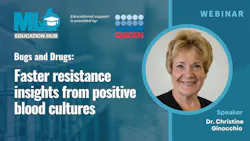
Bugs and Drugs: Faster resistance insights from positive blood cultures
Every hour matters when treating bloodstream infections (BSIs). Traditional blood culture with phenotypic antimicrobial susceptibility testing (AST) remains the gold standard for pathogen identification and susceptibility assessment. However, final culture identification and AST results may take several days. During this time, patients may remain on empiric broad-spectrum antibiotics, while opportunities to escalate or de-escalate therapy may be delayed. This may delay time to appropriate treatment and hospital stay.
Multiplex syndromic PCR testing has been shown to support earlier targeted therapy and antimicrobial stewardship, particularly through simultaneous pathogen and AMR marker detection* in ~1 hour. In this webinar, Dr. Christine Ginocchio will explore how the detection of both common and less-commonly covered AMR markers can inform patient care.
This presentation examines the role of blood culture identification (BCID) molecular panels in contemporary hospital settings. Attendees will learn how rapid BCID diagnostics, when coupled with antimicrobial stewardship programs (ASPs), can support earlier therapy review and optimization. The presentation will also examine the potential impact of rapid diagnostics on broad-spectrum antibiotic use, time to appropriate therapy, length of hospital stay and healthcare costs.
Register to attend the live webinar and receive a link to watch the recording for on-demand viewing.
Key takeaways:
- Faster diagnostics: Understand how BCID molecular panels fit into BSI workflows alongside conventional culture identification and phenotypic susceptibility testing.
- Earlier therapy review: Review clinical data on how rapid detection of AMR markers, including broad coverage of β-lactamase and carbapenemase genes, can support earlier therapy review and antimicrobial stewardship.
- Expanded resistance insights: Explore the value of detecting OXA-family and other less commonly covered carbapenemase genes in positive blood cultures.
*Molecular AMR gene detection should be interpreted together with organism identification, Gram stain, culture, phenotypic susceptibility testing, local epidemiology, antimicrobial stewardship guidance, and the patient’s clinical context. Phenotypic antimicrobial susceptibility testing remains required for final susceptibility confirmation and patient management decisions according to local laboratory procedures.
Learning objectives
At the conclusion of this webinar, participants will be able to:
- Understand the value of expanded gram-positive and gram-negative AMR marker coverage detected with BCID molecular panels
- Demonstrate how identification of OXA-family carbapenemase genes can support earlier management of Acinetobacter infections
- Recognize other clinically relevant carbapenemase targets beyond the big 5 that may provide expanded value for treating carbapenemase-resistant pathogens
- Explain how rapid pathogen identification and AMR-marker detection from positive blood cultures can support earlier therapy decisions when integrated with ASPs.
About the Author
 LABline
Related
 The Gram-negative Pseudomonas bacterium can cause bloodstream infections, especially among hospitalized patients.