What comes after the breakthrough: How blood-based biomarkers will reshape the Alzheimer’s disease diagnostic pathway
Key Highlights
- pTau217 blood biomarkers offer a simple, accurate, and scalable method for early Alzheimer’s detection, comparable to PET and CSF tests.
- Early diagnosis through blood tests can reduce diagnostic delays, facilitate timely treatment, and expand access, especially in regions lacking advanced imaging infrastructure.
- Integration into primary care workflows requires standardized assays, clear guidelines, and easy electronic ordering to ensure confident clinical decision-making.
- Blood biomarkers should complement, not replace, existing diagnostic tools, serving as an efficient triage step to optimize resource use and reduce costs.
- The evolving landscape of disease-modifying therapies underscores the importance of scalable blood testing for early intervention and monitoring treatment response.
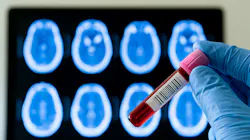
What role do pTau217 blood-based biomarkers play in enabling earlier and more accessible detection of Alzheimer’s disease?
Phosphorylated tau 217 (pTau217) has emerged as one of the most reliable and validated1 blood-based biomarkers for Alzheimer’s disease pathology, allowing clinicians to detect disease-associated biological changes through a simple blood draw. Blood-based assays using highly sensitive antibodies, including ALZpath's pTau217 antibody, have shown strong diagnostic performance, with accuracy approaching that of established “gold standard” methods such as amyloid PET imaging and cerebrospinal fluid (CSF) analysis.
Blood-based biomarkers could shift part of the initial Alzheimer’s evaluation directly into primary care. Today, patients who report memory concerns may be referred to a specialist, delaying diagnostic clarity up to six to 12 months, while symptoms continue to progress.
Because advanced tools like PET scans are not easily deployed at the primary care level, a simple blood draw serves as a scalable way to flag those with underlying pathology and prioritize them for a more comprehensive workup or referral to a specialist. Using a blood test earlier in the diagnostic pathway can reduce barriers to evaluation and helps identify people who may benefit from timely treatment. For laboratories, that means having validated assays and standardized processes to deliver reliable results as testing expands.
As Alzheimer’s blood testing moves toward routine clinical use, what do you see as the most significant shift in how the disease will be diagnosed and managed?
The biggest shift is the ability to detect Alzheimer’s pathology much earlier in the patient journey, moving us from late-stage, reactive confirmation to proactive, early disease management. Currently, an estimated 10 to 12 million older Americans2 live with undiagnosed Alzheimer's-related cognitive impairment. Moving that initial assessment into primary care could help identify symptomatic patients earlier and determine who should move forward with additional testing or treatment.
Today, Food and Drug Administration (FDA)-approved disease-modifying therapies can slow disease progression, and lifestyle interventions are gaining traction, supported by robust data. While these tools cannot yet stop the disease entirely, identifying pathology earlier gives patients and physicians more time to consider the options available to them.
Looking ahead, as preventative therapies emerge, we could see this paradigm evolving further into routine age-based screening, like ordering standard lipid or metabolic panels during your annual physical checkup.
As more blood-based tests enter the market, what will be important to ensure clinicians can confidently interpret and integrate results into broader clinical decision-making?
Establishing regulatory clearance and clear reimbursement pathways is an obvious must-have, but that alone will not drive adoption. Getting doctors to use these tests comes down to making things simple to order, easy to understand, and straightforward in their day-to-day workflows.
Primary care clinicians need basic education on how these blood tests help identify underlying Alzheimer’s disease pathology and what the results mean in the context of the patient’s overall clinical picture, so that they feel confident making clinical decisions. Ordering the test also must be completely effortless; ideally, it should be a quick drop-down option in their existing electronic medical record system that sends the order straight to their standard lab.
Primary care providers simply do not have the time to manage complex external workflows. They need simple, standardized guidelines that tell them exactly what to do next based on the result, whether that means monitoring the patient, ordering follow-up testing, or sending them to a specialist.
There is also an important laboratory consideration: consistency. As these tests move into broader clinical use, standardized sample collection and processing, validated assays, and clear reporting will be important to producing results that clinicians can use confidently.
How should healthcare systems think about blood biomarkers as part of a diagnostic pathway, rather than as a standalone test?
Blood-based biomarkers are not designed to entirely replace PET scans and CSF testing. Instead, healthcare systems should look at them as a smart first line of defense to speed up diagnoses and save resources. A PET scan in the U.S. can cost anywhere from $4,000 to $5,000, while this blood test is set to reimburse at around $128.
Using the blood test as a triage tool can help save health systems millions of dollars and help get patients screened faster. Confirmatory PET scans or lumbar punctures can then be reserved for the patients whose blood work indicates a higher likelihood of underlying Alzheimer’s pathology.
For laboratories, this also means thinking about how these tests fit into the broader diagnostic workflow. The value is not simply in generating a result. It is in producing that result accurately and consistently and reporting it in a way that supports the clinician’s next decision.
Additionally, while the U.S. and Europe have extensive imaging infrastructure, many places around the world lack access to PET scanners, making blood tests an important potential tool for expanding access to Alzheimer’s diagnosis globally.
What needs to happen for blood-based biomarkers to move into broader healthcare settings? What role will clinical laboratories play in that transition?
Clinical laboratories will be central to making these tests part of routine care. It’s one thing to develop an accurate blood test; it’s another to make sure a laboratory can run it reliably, a physician can easily order it, and a patient can access it. Large commercial labs like Labcorp3 and Quest4 have begun adding blood-based assays to their offerings, which is an important step toward making these tests more accessible to patients and physicians.
The next objective is to ensure these tests are widely accessible, enabling all hospitals and reference labs to use them and integrate them with physician ordering systems. Validated assays on existing automated platforms such as Roche Elecsys, Beckman Coulter DxI 9000, Abbott Alinity, and Siemens Atellica can allow labs to run testing at scale and handle high volumes without requiring and investing in new equipment.
Roche’s FDA-cleared Elecsys pTau217 test, for example, is designed to run on the company’s existing Cobas laboratory instruments, with more than 4,500 installed in U.S. laboratories. That illustrates how leveraging existing laboratory infrastructure can help support broader implementation.
Laboratories also play a key role in ensuring that testing is integrated into established processes for specimen handling, analysis, and reporting, so physicians can order and interpret these test results, providing the confidence needed to incorporate them into routine care.
How will the increasing availability of disease-modifying therapies change the role of blood-based biomarkers throughout the patient journey, from initial detection through treatment and monitoring?
Over time, the role of blood tests will continue to change as our treatments evolve. For the drugs available today that slow down progression in symptomatic patients, like Leqembi and Kisunla,5 blood tests can provide a faster and more accessible entry point into the diagnostic process. Catching pathology can help reduce long waiting lists and gets patients onto treatment when the drugs work best – early.
Looking ahead, results from upcoming clinical trials by companies like Eli Lilly and Biogen/Eisai could bring us true preventive treatments. Catching and treating the disease before symptoms appear may give us a chance to stop Alzheimer's disease in its tracks.
If we ultimately have effective treatments that can be given before significant symptoms develop, the need for scalable testing will become even greater. You could never screen entire populations using PET scans or lumbar punctures, so low-cost blood tests could provide a realistic way to identify people who may benefit from further evaluation. In the future, I could see the addition of the pTau217 test to routine annual blood work for anyone over 55.
Over time, blood tests may also give us an easy, inexpensive way to assess disease biology and potentially treatment response.
What role could emerging policy efforts play in accelerating earlier Alzheimer’s testing and expanding access to blood-based diagnostics?
While early reimbursement trends for symptomatic patient testing are encouraging and necessary, policy initiatives are vital for building an infrastructure that can handle mass population screening and preventative care. Transitioning to population-wide screening for pre-symptomatic individuals requires dedicated regulatory, clinical, and payment pathways, which historically take many years to establish.
Legislative initiatives like the ASAP Act6 in the U.S., which is moving through Congress with strong bipartisan support, are critical to accelerating coverage and jumpstarting blood biomarker adoption in preventative settings.
Proactive policy action ensures that health systems, payers, and clinical laboratories prepare their operational infrastructure in advance of therapeutic readouts, avoiding diagnostic bottlenecks once preventative treatments are approved.
The important thing is to prepare now. Health systems, payers, and clinical laboratories need time to build the infrastructure required to support broader testing. That includes validated assays, standardized sample handling, and processes for delivering consistent, clinically actionable results.
If effective preventive treatments emerge, we want the diagnostic system to be ready to identify the people who could benefit from them rather than having to build that infrastructure after the fact.
References
- Ashton NJ, Brum WS, Di Molfetta G, et al. Diagnostic accuracy of a plasma phosphorylated tau 217 immunoassay for Alzheimer disease pathology. JAMA Neurol. 2024;81(3):255-263. doi:10.1001/jamaneurol.2023.5319.
- Haymarket’s Clinical Content Hub. Understanding mild cognitive impairment in Alzheimer disease. Neurology Advisor. Reviewed July 2024. Accessed October 6, 2026. https://www.neurologyadvisor.com/cch/mild-cognitive-impairment-alzheimer-disease-dementia-csf-biomarkers/.
- Labcorp to offer first FDA-cleared blood test to detect Alzheimer's disease pathology in both primary and specialty care settings. Labcorp. August 24, 2026. Accessed October 6, 2026. https://ir.labcorp.com/news-releases/news-release-details/labcorp-offer-first-fda-cleared-blood-test-detect-alzheimers.
- Quest Diagnostics to offer FDA-cleared Roche pTau217 blood test to assess Alzheimer's disease pathology. Quest Dianostics. August 24, 2026. Accessed October 6, 2026. https://ir.questdiagnostics.com/press-releases/press-release-details/2026/Quest-Diagnostics-to-Offer-FDA-Cleared-Roche-pTau217-Blood-Test-to-Assess-Alzheimers-Disease-Pathology/default.aspx.
- Donanemab approved for treatment of early Alzheimer's disease. Alzheimer’s Association. Accessed October 6, 2026. https://www.alz.org/alzheimers-dementia/treatments/donanemab.
- H.R.6130 - ASAP Act. Congress.gov. Accessed October 6, 2026. https://www.congress.gov/bill/119th-congress/house-bill/6130/text.
About the Author
 Mike Banville
Mike Banville
is CEO & President of ALZpath.