
Reading between the numbers: What the JIM autoimmune study really tests
Key Highlights
- The study compares Pictor's assay against two independent commercial platforms, providing a comprehensive view of performance without relying on a gold standard.
- Sample selection from distinct autoimmune disease patients enhances the realism and reliability of the validation results.
- Concordance metrics vary across analytes, with notable variability in anti-Ro52 detection, reflecting known assay-specific differences and epitope recognition complexities.
- Assay format—ELISA in a 96-well plate—offers operational simplicity and compatibility with existing laboratory workflows, facilitating transferability.
- Transparency in reporting variability and detailed performance data supports informed interpretation and practical decision-making for laboratories.
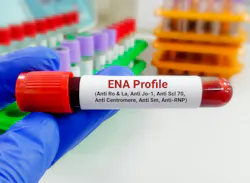
When a study reports concordance data for a new assay against two established commercial platforms, most readers scan the tables for a headline number and move on. I read the study design first.
My work in assay development at Pictor gives me a natural interest in how independent data on this platform holds up, but I'd bring the same scrutiny to any third-party benchmarking study in this space.
Over the last several years, my work has increasingly included assay qualification, validation, and regulatory packages for investigational new drug (IND)-enabling studies and first-in-human clinical trials. This work requires the evidence package to withstand detailed review by regulators, clinical teams, and CRO partners. That experience shapes how I think about validation at Pictor today. The recently published Journal of Immunological Methods study1 benchmarking Pictor's targeted proteomic assay for extractable nuclear antigens (ENA) against two established commercial platforms provides an opportunity to look beyond the headline performance metrics and examine the study design and evidence supporting the results.
When evaluating validation data, the questions I focus on are straightforward:
- What was the assay benchmarked against?
- How were the samples selected?
- Did the study design provide confidence in the conclusions being drawn?
Why ENA testing is harder to standardize than it looks
Testing for suspected systemic autoimmune rheumatic disease (SARD) commonly involves antinuclear antibody (ANA) and extractable nuclear antigen (ENA) testing. ANA testing provides a broad indicator of autoimmune activity, while ENA testing identifies disease-associated autoantibodies such as TRIM21/Ro52, TROVE2/Ro60, SSB/La, Sm, RNP/Sm, Scl-70, Jo-1, and CENP-B. Testing algorithms vary across laboratories and clinical settings, and ANA and ENA results do not always follow a simple reflex-testing pattern.
Here's the part that doesn't get discussed enough: there is no single universally accepted gold standard for ENA testing. Line immunoassays, bead-based multi-analyte platforms, and traditional ELISAs are all in active clinical use, and that platform diversity is a real source of inter-laboratory variability. Cost and infrastructure requirements further limit which labs can offer broad ENA panels at all.
From a biopharma validation standpoint, the absence of a gold standard isn't unusual. It's the condition under which most bridging studies are designed. The real question isn't whether a gold standard exists. It's whether the study design accounts for the fact that it doesn't.
How this study was actually designed and why that matters
I read a new assay's validation data the same way I'd evaluate a CRO-submitted package:
- What was it benchmarked against?
- How were the samples selected?
- Does the study design provide confidence in the conclusions being drawn?
The comparators here were two commercial ENA testing platforms already used in clinical laboratories: the Euroimmun ENA Line immunoassay and the Bio-Rad BioPlex 2200 ENA system. Both are established, independent commercial platforms already in clinical use. Neither is an internal Pictor reference standard, which matters because, in the absence of a universally accepted gold standard, comparing performance against multiple independent platforms can provide greater confidence that the observed agreement reflects performance across real-world testing environments rather than alignment with a single reference method.
The performance evaluation used 89 serum samples from patients with confirmed autoimmune diseases. Importantly, these samples were distinct from the disease and control samples used earlier in the study to establish assay cutoff values. That separation matters: it reduces the risk of overestimating assay performance, and using independent samples for performance testing provides a more realistic assessment of how the assay is likely to perform outside the development setting.
The study measured three-way concordance across all three platforms, pairwise positive percent agreement (PPA) and negative percent agreement (NPA), and both within-lot and between-lot analytical precision.
In biopharma, we don't validate an assay against itself. Choosing to benchmark against two independent commercial platforms simultaneously and publishing the full three-way concordance data is a design decision worth noting on its own. In ENA testing where there is no universally accepted gold standard, that approach helps paint a more complete picture of performance — and it gives readers the full data to judge the level of agreement for themselves rather than a curated summary.
What the data show and where the nuance is
Sm and CENP-B reached 95% three-way agreement, Jo-1 reached 100%, and PPA and NPA exceeded 85% for most of the autoantibody panel across pairwise comparisons.
The result that deserves a closer look is TRIM21/Ro52, which showed 67.3% three-way agreement — the lowest of any analyte in the panel, with the BioPlex-vs-Euroimmun comparison alone showing only 61.8% positive agreement.
The lower agreement observed for TRIM21/Ro52 is consistent with previous reports describing variability in anti-Ro52 detection across assay platforms. Infantino and colleagues observed discordant anti-Ro52 results despite both assays using recombinant Ro52 antigen and suggested that assay-specific factors, including antigen immobilization and bead chemistry, may contribute to differences in performance.2 Epitope-mapping studies have further demonstrated that anti-Ro52 antibodies may recognize multiple regions of the Ro52 protein. As a result, differences in antigen presentation and epitope accessibility between assay formats may influence antibody detection and contribute to inter-platform variability.
The precision data are also worth examining. Inter-plate (same-lot) CVs ranged from 1.2% to 18.9% across antigens, with high- and medium-reactivity samples generally remaining below 15%. TRIM21/Ro52, SSB, and Sm showed the most consistent intra-lot reproducibility. Inter-lot CVs were more variable, ranging from 1.8% to 33.3%, though most high-reactivity samples again remained below 15%. The higher variability concentrated in low-intensity samples is a pattern commonly observed near an assay's lower limits of detection.
An assay development scientist reading this doesn't expect perfect concordance across every analyte. No assay is perfect, and no platform agrees perfectly with every other platform. What matters is whether a study is transparent about where variability occurs and provides enough context to interpret it clearly. This study does both.
What the format difference actually means for labs
Beyond the concordance data, there's a practical question laboratory leaders will ask: what does it take to run this assay in the real world?
The assay runs in a standard 96-well ELISA format, using plate washers and workflows that are already familiar to many laboratories. Detection is based on a conventional HRP-TMB colorimetric reaction, quantified using the PictImager. For laboratories already familiar with ELISA-based workflows, that format may offer a relatively straightforward operational fit without requiring the specialized instrumentation associated with some other testing platforms.
Another practical consideration is consolidation. A single workflow measures multiple ENA targets simultaneously, which may offer operational advantages for laboratories evaluating how to structure testing workflows, allocate personnel time, and manage reagent inventory.
In resource-constrained biopharma and CRO environments, assay transferability isn't a footnote. An assay can generate excellent data, but laboratories still need to be able to implement it, train staff on it, and run it efficiently. That's why performance metrics are only part of the picture — the workflow itself, and how realistically it fits the environment where it will be used, matters just as much.
What I take away as an assay development scientist
Stepping back from the specific performance metrics, what stands out most is the availability of peer-reviewed, open-access, third-party benchmarking data. The study evaluates the assay against two established commercial platforms, reports the full concordance results, and is transparent about where agreement was strongest and where interpretation requires more nuance.
For laboratories supporting autoimmune disease research, and particularly those evaluating platform options for ENA testing, this is a study worth reading in full — not just the abstract.
References
- Rho JH, Kinga A, Shetty B, Furuya Y. Diagnostic performance of Pictor's targeted proteomics assay for extractable nuclear antigens compared with commercial line immunoassay and addressable laser bead immunoassay platforms. J Immunol Methods. 2026;549:114087. doi:10.1016/j.jim.2026.114087.
- Infantino M, Bentow C, Seaman A, et al. Highlights on novel technologies for the detection of antibodies to Ro60, Ro52, and SS-B. Clin Dev Immunol. 2013;2013:978202. doi:10.1155/2013/978202.
About the Author
 Ana Paula Galvao Cugnetti
Ana Paula Galvao Cugnetti
is Associate Director of Assay Development at Pictor Holdings Inc. She brings more than 15 years of experience in assay development, immunology and translational science, including extensive experience supporting the qualification and validation of assays for preclinical and clinical studies.