UHealth Laboratories, University of Miami Health System: Performance-driven culture anchored by skilled, safety-focused professionals

Medical Laboratory Observer’s 2026 Lab of the Year is UHealth Laboratories, the enterprise laboratory for the University of Miami Health System. There are 18 UHealth Laboratories, including hospital-based; ambulatory centers; the Sylvester Comprehensive Cancer Center and its satellites; research laboratories; and advanced specialty facilities, such as the Bascom Palmer Eye Institute. 630 full-time equivalent staff are employed by UHealth Laboratories, where last year, 2,324,726 tests were performed in clinical pathology, anatomic pathology, and blood bank/transfusion services.
UHealth is South Florida’s only university-based medical system. In this academic ecosystem, UHealth Laboratories supports inpatient, emergency, and highly specialized medical care. The laboratory also provides 24/7 clinical consultation support to one of the nation’s largest transplant programs (500+ solid organ transplants a year). The immunology and histocompatibility laboratory provides transplant immunology testing, including high-resolution next-generation sequencing/human leukocyte antigen typing, crossmatch, antibody testing, chimerism, transplant virology, immune monitoring, and mass spectrometry therapeutic drug monitoring.
MLO’s Lab of the Year issue is our most anticipated of the year, and each year, we receive many notable nominations. Laboratories are judged on achievements across five categories: customer service, productivity, teamwork, education and training, and strategic outlook.
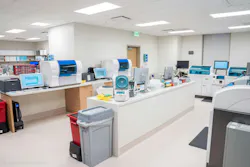
The many achievements of UHealth Laboratories underscores its importance within a health system committed to innovation, discovery, and service to the region’s diverse communities.
Customer service
Customer service at UHealth Laboratories is centered on delivering a reliable, patient-focused diagnostic experience supported by consistent communication, operational transparency, and close partnership with clinical teams. UHealth’s service model is designed to provide patients and providers with timely access, dependable turnaround time and results, and a courteous, professional experience. Specific examples that demonstrate UHealth’s commitment to customer service are as follows:
- Patient feedback is used to refine the service experience. The Outpatient Lab Likelihood to Recommend analysis for January through December 2025 demonstrated strong performance, with 5,575 total responses and a “very likely to recommend” score of 87%. 91% of patients reported positive interpersonal interactions and 83% expressed confidence in the laboratory’s ability to meet their needs. Analysis of patient feedback also identified opportunities for improvement, particularly in communication domains such as listening carefully, explaining next steps, and clarifying information. Comments within the survey also indicated opportunities to improve wait-time consistency and the functional layout of certain outpatient draw stations. These insights will inform targeted improvement actions and align with the system’s commitment to listening to patient voices and addressing concerns proactively.
- Over the past two years, UHealth has executed one of the most significant access and infrastructure expansions in its history—opening UHealth Doral (November 18, 2024) and UHealth SoLé Mia (September 30, 2025). These ambulatory facilities were designed and built by UHealth to expand access to academic medicine, and each incorporates dedicated laboratory space that supports modern workflows and enterprise-wide standardization. These new laboratories are equipped with state-of-the-art analyzers, automation platforms, and smart-specimen workflows. To strengthen access and service coverage, UHealth expanded its draw-station footprint with eight new phlebotomy chairs at UHealth Doral and nine chairs at UHealth SoLé Mia, increasing same-day laboratory access and pre-analytical capacity for the surrounding communities.
- Customer service for clinicians is provided through predictable turnaround times, consistent communication, and integrated digital tools. The use of EPIC, Sunquest, CoPath, SoftLab, and real-time dashboards helps providers access results efficiently, monitor specimen status, and request additional testing without delays. Laboratory teams maintain direct lines of communication with emergency medicine, oncology, surgery, and ambulatory clinics, ensuring that urgent needs, critical values, and add-on requests are managed promptly. The courier network, operating across all sites, supports the reliable movement of specimens to ensure consistent service across the system.
- Operational reliability further strengthens customer service. Laboratory teams coordinate continuously between hospital-based labs, ambulatory centers, oncology satellites, and specialized facilities to maintain service stability under changing operational conditions. When workload surges or instrumentation challenges arise, sites support one another through workload redistribution, back-up testing, and coordinated courier movement. This enterprise connectivity sustains a high-performing laboratory system where seamless service delivery for patients and providers is maintained.
Productivity
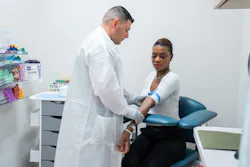
Productivity is supported by standardized processes, disciplined operational oversight, continuous improvement, and facility modernization. A commitment to eliminating waste, reducing variation, and strengthening the flow of services across the laboratory network guide daily operations and ensure that the laboratory system maintains reliable turnaround times, even as testing volumes continue to grow. All workflows are mapped, documented, and maintained in PolicyStat and are regularly reviewed to enable teams to identify and correct inefficiencies and align processes with best practices. Specific examples that demonstrate UHealth’s commitment to productivity are as follows:
- Productivity is monitored through dashboards developed by UHealth staff that extract real-time data from EPIC, Sunquest, CoPath, SoftLab, RedCap, RL6, and Visiun. These dashboards support daily decision-making and allow leaders to manage turnaround times, volumes, workload distribution, pre-analytical performance, equipment uptime, and accuracy metrics across all areas of Clinical Pathology, Anatomic Pathology, Blood Bank, and Phlebotomy. Monthly reviews evaluate financial indicators, quality measures, delay metrics, TAT performance, safety incidents, and compliance outcomes such as proficiency testing, contributing to a comprehensive oversight structure.
- Performance monitoring is embedded into routine laboratory operations through dashboards, executive reviews, departmental meetings, operational huddles, and one-on-one performance discussions. This structured oversight enables rapid identification of trends, timely intervention, and continuous recalibration of priorities. Integrating real-time data with a comprehensive performance management structure ensures that UHealth Laboratories maintains operational discipline, supports data-driven decisions, and advances strategic objectives.
- Multiple sites are undergoing analyzer upgrades to transition from legacy systems to newer Roche Cobas solutions, including Cobas Pure and Cobas Pro platforms. These upgrades enhance throughput, reduce maintenance interruptions, improve standardization, and support more predictable operations across Plantation, Deerfield Beach, Coral Gables, Hollywood, Fort Lauderdale, Coral Springs, and select Miami sites.
- Phlebotomy improved wait-time performance even as patient visits surpassed 165,000 annually, and Clinical Pathology sustained rapid turnaround times despite increases in volume. The expansion and modernization of physical laboratory spaces have been a key driver in this productivity. At UHealth Doral, the laboratory footprint now includes more than 1,600 square feet dedicated to Clinical Pathology, more than 360 square feet for Anatomic Pathology, and more than 500 square feet for the expanded draw station. Similarly, at UHealth SoLé Mia, more than 1,700 square feet support Clinical Pathology operations, more than 500 square feet support Anatomic Pathology, and over 1,000 square feet are dedicated to phlebotomy and patient access.
Teamwork
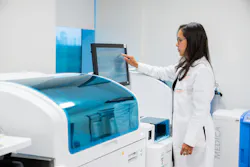
Teamwork is central to UHealth’s success in delivering diagnostic services across a large and geographically distributed network. Daily operational huddles allow frontline staff and supervisors to review workflow priorities, staffing considerations, equipment readiness, and emerging issues, creating a consistent forum where staff can coordinate efforts and ensure alignment throughout the day. Issues requiring escalation are captured through RedCap, which provides an efficient and transparent mechanism to document concerns, trigger timely leader follow-up, and support the resolution of recurring issues through root-cause analysis. This closed-loop approach promotes a culture of psychological safety, responsiveness, and shared ownership of operational reliability. Examples of UHealth’s positive teamwork culture are as follows:
- The Powered by You systemwide engagement survey reinforces teamwork by providing structured opportunities to assess team dynamics, communication effectiveness, clarity of direction, support resources, and overall work environment across all laboratory sites. The survey evaluates multiple dimensions of engagement, including teamwork and collaboration, employee empowerment, manager relationship, clarity of expectations, continuous improvement, well-being, recognition, and diversity and inclusion. After each survey cycle, results are carefully reviewed with staff, allowing teams to explore the meaning behind the responses, identify root causes, and jointly select priority areas for improvement. Action plans are developed collaboratively, focusing on specific behaviors, resources, or processes that strengthen team cohesion and operational reliability. These plans are then implemented and monitored over time, with leaders recognizing progress, reinforcing positive outcomes, and making adjustments when necessary.
- Transparency plays an important role in UHealth’s culture. Operational dashboards displaying test volumes, turnaround times, quality indicators, safety events, staffing metrics, and performance trends provide all staff with access to the same information, encouraging shared responsibility for results and continuous improvement. Monthly leadership reviews bring together managers and supervisors from all UHealth Laboratories’ sites to evaluate performance, compare trends, and coordinate enterprise-level adjustments. These discussions help unify the network, encourage problem-sharing and solution-building, and ensure that decisions reflect the realities of each location.
- Teamwork is also strengthened by regular interactions such as case consultations, technical discussions, and cross-training among Anatomic Pathology, Clinical Pathology, Blood Bank, and Immunology and Histocompatibility Laboratory teams. These interactions deepen understanding of shared processes, interdependencies, and the collective impact of laboratory performance on clinical care. Additionally, collaborative relationships with clinical units, nursing teams, emergency services, oncology clinics, and transplant programs ensure that laboratory operations remain aligned with clinical needs and patient care priorities.
Education and training
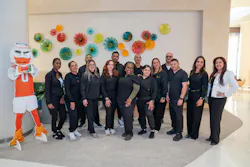
Education and training are foundational to sustaining a highly competent, safety-driven workforce. UHealth Laboratories has a comprehensive and structured education framework designed to develop a highly competent workforce capable of supporting safe, timely, and accurate diagnostic services across all UHealth locations. Education and training activities follow a unified, systemwide model that ensures consistency in onboarding, competency validation, and ongoing skill development. Examples of UHealth Laboratories’ educational approach are as follows:
- Newly hired staff complete standardized orientation and technical onboarding pathways supported by learning maps tailored for each role. These learning maps guide employees through essential knowledge, laboratory practices, system navigation, quality expectations, safety protocols, and their progression toward independent performance. This structured approach ensures early alignment with UHealth’s standards for safe, high-quality diagnostic work.
- Competency assessments are conducted routinely throughout the year across all specialties, ensuring continued proficiency in phlebotomy, testing procedures, safety practices, and instrument operation. The entire operation is supported by a standardized documentation system, PolicyStat, which provides employees with immediate access to job-specific procedures, policies, competency materials, and reference information. This centralized system contributes to consistent practice across all sites and supports compliance with CLIA and accreditation requirements.
- Continuing education is provided through UHealth’s enterprise platforms, including ULearn and LinkedIn Learning, which provide access to structured coursework, curated modules, and specialized technical content aligned with individual development needs. A culture of continuous learning is further supported through an annual “Continuous Improvement” goal required of all employees. This goal prompts each staff member to identify and pursue targeted opportunities to expand knowledge, strengthen technical and interpersonal skills, and refine behaviors that contribute to departmental performance and service excellence.
- Ongoing education is embedded in daily operations through morning huddles, technical case discussions, leadership rounding, quality reviews, and peer-to-peer mentoring. These mechanisms create real-time learning moments, promote knowledge transfer between experienced and new staff, and support rapid dissemination of updates related to workflows, safety alerts, or technology implementations.
- Leadership development is a central pillar of the educational framework. Supervisors and managers participate in structured leadership training designed to strengthen communication, coaching, standard work oversight, accountability, and problem-solving. As part of this initiative, UHealth Laboratories is implementing a Training Within Industry (TWI)–based program for supervisors. The program builds capability through job instruction, job methods, job relations, and job safety. These modules provide leaders with the skills to teach tasks effectively, analyze workflows, maintain constructive employee relationships, and uphold safe work practices.

Strategic outlook
UHealth Laboratories operates under a unified enterprise strategy that aligns with the University of Miami Health System’s mission to deliver high-quality academic medicine, expand access throughout South Florida, and strengthen integration between clinical care, research, and education. The strategic direction centers on creating a standardized, high-reliability diagnostic network across all laboratory locations — hospital-based laboratories, ambulatory centers, oncology satellites, specialty laboratories, and transplant services — supported through centralized governance, operational alignment, and a robust quality management infrastructure. Elements of UHealth Laboratories’ strategic plan are as follows:
- The strategic plan is guided by system values summarized by the acronym DIRECCT: Diversity, Integrity, Responsibility, Excellence, Compassion, Creativity, and Teamwork. These values inform expectations for professional conduct, collaboration, and decision-making across the laboratory system. Complementing these values are UHealth’s service standards — safety, caring, responsiveness, and professionalism — which shape the way all team members interact with patients, providers, and colleagues.
- The core pillars of the laboratory strategic plan include growth, operational excellence, quality and compliance, and patient care. Growth focuses on expanding UHealth’s diagnostic footprint by incorporating new technologies, developing advanced test methods, and increasing community access through sites such as Doral and SoLé Mia. Operational excellence prioritizes performance improvement, workflow optimization, digital innovation, and staffing models that support predictable turnaround times and efficient resource utilization. Quality and compliance emphasize systemwide standardization, continuous readiness, and rigorous accreditation standards across all CLIA-certified sites. Patient care centers on delivering accurate, timely, and actionable results that support clinical decision-making in all service areas, including emergency care, oncology, specialty medicine, and transplant services.
- Once strategic goals are established, they are deployed systematically across all levels of the organization. Executive leadership sets systemwide objectives, and each laboratory location and functional area aligns its annual initiatives with the broader strategic agenda, ensuring that all team members understand their role in achieving enterprise goals. Communication of the strategy and progress updates occur through leadership forums, intranet channels, educational platforms, and unit-based meetings, ensuring transparency and alignment across the network. This structured deployment model reinforces accountability and supports consistent execution across a geographically distributed system.
Closing
UHealth Laboratories exemplifies how a large, complex diagnostic network can operate with consistency, innovation, and a strong commitment to patient-centered care. Across hospital laboratories, ambulatory centers, oncology sites, and specialty facilities, the organization demonstrates how operational discipline, data-driven decision-making, and continuous education works to support high-quality clinical outcomes. At the heart of this success are laboratory professionals that embrace collaboration, accountability, and service to the communities of South Florida. As Associate Vice President Paola Pagan noted, “Receiving the Medical Laboratory Observer Laboratory of the Year recognition is a tremendous honor for UHealth Laboratories and a reflection of the dedication of nearly 600 laboratory professionals who support patient care across our health system every day. Our focus has been on building a unified, high-reliability laboratory network that strengthens clinical decision-making and improves patient outcomes.”
About the Author
 Christina Wichmann