Ebola preparedness 2.0: A new approach to the laboratory response
Key Highlights
- Laboratories should perform detailed risk assessments covering specimen collection, transport, processing, and disposal to ensure safety during VHF testing.
- Routine diagnostic tests should continue alongside VHF testing, with safety measures tailored to specific activities and laboratory setups.
- Use of closed-tube systems and sealed centrifugation equipment can reduce aerosol risks, while PPE should be appropriate and staff must be trained in proper donning and doffing procedures.
- Waste management plans must address Category A infectious material requirements, including proper packaging, storage, and transportation protocols.
- Regular tabletop exercises simulating suspected VHF cases help identify gaps in preparedness and improve response strategies.
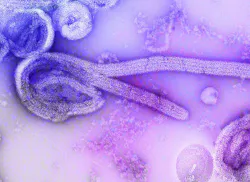
The possibility of an Ebola patient entering a U.S. healthcare facility is remote, but remote does not mean impossible. The 2026 outbreak of Bundibugyo virus disease in Africa has once again brought Ebola preparedness into focus for hospitals and clinical laboratories. Currently, it is the second largest Ebola outbreak on record.1 While the Centers for Disease Control and Prevention (CDC) continues to assess the risk to the U.S. population as low, the event provides an important reminder: preparedness cannot begin after a potentially infected specimen reaches the laboratory.
For laboratory leaders, there is another reason to pay attention. New CDC guidance published in 20262 provides a somewhat different perspective on the role of the clinical laboratory when a patient is being evaluated for a viral hemorrhagic fever (VHF) or another high-consequence disease. Rather than assuming that routine laboratory testing should stop while Ebola is being ruled out, the guidance emphasizes providing necessary diagnostic testing while using a site- and activity-specific risk assessment to determine how that testing can be performed safely. That is an important change in approach, and not one every laboratory will be comfortable implementing.
The patient still needs laboratory testing
When Ebola is suspected, it is understandable for fear to drive decision-making. The disease is severe, laboratory personnel may have little or no experience handling specimens from a suspected patient, and images of healthcare workers wearing extensive PPE can create the impression that any contact with a patient specimen requires extraordinary containment. However, it may be that the patient in the emergency department does not have Ebola at all.
Most ill travelers evaluated after returning from an area where a VHF is occurring ultimately have another diagnosis. Malaria is particularly important, but influenza, COVID-19, typhoid fever, bacterial infections, and other illnesses may produce similar initial presentations. Coinfections are also possible. Delaying routine testing while waiting to exclude Ebola can therefore delay diagnosis and treatment of the condition the patient actually has.
In its updated guidance, the CDC now specifically stresses that diagnostic assessment and laboratory testing for more likely conditions should continue while VHF testing is underway. Among the routine tests that may be important are a CBC with differential and platelet count, electrolytes, renal and liver function testing, glucose, coagulation testing, urinalysis, and blood cultures. Depending on the presentation, respiratory, gastrointestinal, and malaria testing may also be necessary. The question for the laboratory, then, becomes less about whether testing can be performed and more about how it can be performed safely.
Start with a risk assessment—not a universal testing list
There is no single testing plan appropriate for every laboratory. A large academic medical center with specialized containment equipment and extensive biosafety expertise has different capabilities than a small community hospital laboratory. That makes the risk assessment central to preparedness.
The CDC recommends that laboratories perform site- and activity-specific risk assessments before testing specimens from patients suspected of having a VHF or another high-consequence disease. The assessment should follow the specimen through its entire journey: collection, transport, receipt, processing, analysis, storage, disposal, and any potential spill or exposure response.
Consider what actually happens to the tube. Does someone manually remove the cap? Is an aliquot made? Is the specimen centrifuged? Could an instrument generate a splash or aerosol? Is the tube transported through a crowded laboratory? What happens to the waste? What would staff do if the tube broke? These questions are far more useful than simply declaring an instrument or laboratory area “safe” or “unsafe.”
The risk assessment should examine engineering controls, work practices, PPE, sharps hazards, aerosol-generating activities, spill response, decontamination, waste management, specimen transport, training, and exposure procedures. The CDC also specifically states that pneumatic tube systems should not be used for these specimens. The resulting decisions should be documented and incorporated into the laboratory’s exposure control plan.
Look closely at the testing process
Instrumentation should be evaluated individually rather than automatically excluded from use. Closed-tube systems offer an obvious advantage because the specimen remains capped during analysis. Centrifugation requires additional consideration because of its potential to generate aerosols. When centrifugation is necessary, sealed rotors or safety cups should be used, and loading and unloading in a biological safety cabinet should be considered when possible. Automated blood culture instruments have also been used successfully when laboratories first evaluate their processes and associated risks.
Opening specimen tubes and preparing aliquots deserve particular attention. The CDC recommends using a Class II biological safety cabinet (BSC) whenever possible for specimen manipulations such as these. Where a BSC is unavailable, laboratories may need to consider alternative containment methods along with enhanced work practices and PPE.
The CDC recommends that laboratories perform site- and activity-specific risk assessments before testing specimens from patients suspected of having a VHF or another high-consequence disease.
Laboratory leaders should also contact instrument manufacturers before an event occurs. Determine whether manufacturers have recommendations or restrictions regarding specimens from patients suspected of having a VHF. Ask what internal decontamination might be necessary following a spill or contamination event and whether particular disinfectants could damage instrument surfaces or components. Those are difficult questions to answer at 2:00 a.m. while a patient is waiting for results.
PPE should match the risk
More PPE is not automatically safer. For manipulation of clinical specimens from suspected patients, the CDC describes protection that includes disposable gloves, a fluid-resistant or fluid-impermeable solid-front gown, a surgical mask, and appropriate eye protection. Engineering controls and work practices should supplement PPE, particularly where splash or aerosol hazards exist.
A laboratory may determine through its risk assessment that additional protection is warranted for certain activities. However, adding unfamiliar PPE can introduce new risks. Complicated ensembles can interfere with movement, visibility, dexterity, and communication, and improper doffing can cause self-contamination.
If enhanced PPE is part of the laboratory plan, personnel need to practice with it before an actual event. A procedure sitting in a policy manual does not constitute preparedness. Staff should demonstrate that they can don, work in, and remove the PPE correctly.
Don't forget what leaves the laboratory
Waste is one of the most easily overlooked components of high-consequence pathogen planning. Waste associated with a patient infected with Ebola or another applicable VHF may require management as Category A infectious material. That can dramatically change how waste is contained, stored, transported, and ultimately treated or disposed of.
Laboratory leaders should know whether their current medical waste vendor can manage Category A waste. They should understand where that waste would be stored, who is trained to package it, what containers are needed, and what transportation requirements apply. Waiting until a suspected patient has generated bags of waste to make those decisions is not a viable plan.
The same principle applies to specimens sent elsewhere. Laboratories should understand Category A packaging and shipping requirements and identify personnel who maintain the appropriate training. Referral laboratories must also receive appropriate communication so that personnel are not unknowingly handling a specimen associated with a suspected high-consequence pathogen. The CDC recommends that healthcare systems know their laboratory and specimen-handling capabilities and establish plans with public health laboratories and other facilities before they are needed.
Know where your facility fits
Not every hospital needs to become an Ebola treatment center, and not every laboratory needs to perform every test. A critical component of preparedness is understanding the healthcare system's capabilities and limitations. If a facility cannot safely provide the necessary clinical care and diagnostic testing, the CDC recommends transfer of the patient to a facility capable of managing the patient while VHF testing is completed.
That means laboratory planning cannot occur in isolation. Laboratory leadership should be involved with infection prevention, emergency management, nursing, infectious disease specialists, environmental services, occupational health, public health authorities, and hospital administration. Questions about patient transfer, specimen movement, testing, waste, PPE, exposures, and communication should have answers before a suspected case appears.
Preparedness means practicing the plan
The most valuable response to the updated guidance may be to bring the laboratory's Ebola or VHF plan off the shelf and test it. Conduct a tabletop exercise. Begin with a patient arriving in the emergency department with fever and a relevant travel or exposure history. Follow the process from initial screening through specimen collection and testing. Ask where the specimen goes, who receives it, what tests are performed, what PPE is used, which instruments are involved, and how results are communicated.
Then introduce a complication. A tube leaks. A centrifuge malfunctions. An employee experiences a splash. The waste vendor refuses the material. The analyzer needs service after testing. The patient needs a test the laboratory had not included in its original plan. Exercises reveal gaps that policies often hide.
The updated CDC approach gives laboratories more flexibility to provide essential testing, but flexibility requires preparation. The goal is not to create fear around Ebola specimens or to assume every laboratory must perform every possible test. The goal is to understand the risks, establish appropriate controls, and know the laboratory's capabilities before the situation becomes real.
Ebola may never arrive at your laboratory, but preparedness for Ebola strengthens systems that matter every day: risk assessment, PPE competency, specimen management, spill response, communication, waste handling, and emergency planning. In that sense, preparing for a rare, high-consequence pathogen is not planning for a single disease. It is building a safer laboratory.
REFERENCES
1. Ebola outbreak: Current situation. CDC. June 8, 2026. Accessed September 3, 2026. https://www.cdc.gov/ebola/situation-summary/index.html.
2. Guidance on performing routine diagnostic testing for patients with suspected VHFs or other high-consequence disease. CDC. May 26, 2026. Accessed September 2, 2026. https://www.cdc.gov/viral-hemorrhagic-fevers/php/laboratories/guidance-on-performing-routine-diagnostic-testing-for-patients-with-suspected-vhfs-or-other.html.
About the Author
 Dan Scungio, MLS(ASCP), SLS, CQA (ASQ)
Dan Scungio, MLS(ASCP), SLS, CQA (ASQ)
has more than 25 years of experience as a certified medical tech. He was a lab manager for 10 years before becoming the laboratory safety officer for Sentara Healthcare, a system of 12 hospitals and more than 20 labs and draw sites in Virginia and North Caroline. As “Dan the Lab Safety Man,” he provides consulting, education, and training in the U.S. and Canada.