The throughput paradox: Why faster testing alone won't solve the modern laboratory's challenges
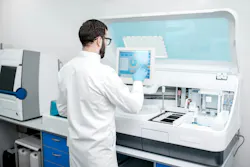
Clinical laboratories are operating under increasing pressure. Testing volumes continue to rise, driven by aging populations, expanded test menus, and growing demands for rapid clinical decision-making. At the same time, laboratories are contending with persistent staffing shortages and financial constraints that limit their ability to simply “add more resources” to meet demand.
This combination has created a new operational reality—one in which efficiency, uptime, and scalability are no longer differentiators but requirements. Nowhere is this more apparent than in the realm of clinical chemistry where chemistry systems are central to routine diagnostic operations and testing.1
In this environment, laboratories are increasingly prioritizing analyzers that minimize maintenance requirements, reduce workflow interruptions, and support reliable operations as testing demand grows.2 By helping staff spend less time on routine maintenance and more time on testing, these systems contribute to higher uptime and more efficient laboratory workflows.
Modern chemistry analyzers must do more than process large numbers of samples. They must scale seamlessly to meet growing demand, maintain consistent turnaround time under pressure, and minimize maintenance burden in laboratories where every minute of staff time is increasingly valuable.
Is your laboratory truly scalable—or just working harder?
Large hospital networks and reference laboratories routinely process thousands—sometimes tens of thousands—of tests per day. Under these conditions, analyzers must be capable of scaling to accommodate both predictable baseline demand and unpredictable spikes in workload.
However, scalability is not simply a function of maximum throughput specifications. Laboratories require systems that can sustain high performance across extended operating periods without sacrificing quality. Bottlenecks at any point in the analytical process—sample handling, reagent management, or data processing—can have downstream effects that delay results and impact patient care.
Modern high-volume chemistry analyzers are increasingly designed with scalability in mind. Features such as parallel processing capabilities, high-capacity reagent storage, and intelligent workflow management allow laboratories to maintain steady throughput even under peak loads.
High-volume platforms can also support incremental expansion through modular configurations, allowing laboratories to increase capacity without disrupting established workflows. Standardization across systems, including shared reagents and consumables, further helps maintain consistency as laboratories scale operations.
Beyond throughput and scalability, analytical performance remains foundational. Systems designed with high assay reproducibility and strong quality performance can reduce troubleshooting, limit repeat testing, and help laboratories maintain consistent operations at scale.3
Does peak throughput matter if you can’t sustain it?
While high throughput is a key requirement, the ability to sustain that throughput over time is equally critical. Continuous operation—often across multiple shifts or 24-hour cycles—places significant demands on both instruments and laboratory staff.
In this context, downtime becomes a major operational risk. Even brief interruptions can create backlogs that cascade throughout the laboratory, delaying turnaround times and increasing pressure on already stretched personnel.
To address this challenge, manufacturers are focusing on enhancing system robustness and uptime. This includes improving hardware reliability and the ability to load reagents without disrupting full operations.
However, one of the most impactful areas of innovation lies in reducing the frequency and duration of required maintenance.
Is maintenance the hidden tax on laboratory productivity?
Routine maintenance has always been a necessary aspect of laboratory operations. Tasks such as cleaning probes, replacing consumables, calibrating systems, and performing quality checks are essential for ensuring accurate results.
But in today’s environment, maintenance has taken on new significance. With fewer technologists available, every minute spent on maintenance is time taken away from critical analytical or supervisory tasks.
In high-volume laboratories, even small increases in maintenance time can have outsized effects—an analyzer that requires frequent intervention may force staff to interrupt workflows, delay testing, or reallocate resources from other areas.
As a result, laboratories are placing increasing emphasis on analyzers that are designed to minimize maintenance burden. This includes the following:
- Extending maintenance intervals to reduce how often tasks must be performed
- Automating routine procedures to limit manual intervention
- Simplifying maintenance workflows to reduce time and complexity
- Designing systems with fewer components that require regular servicing
By reducing maintenance demands, laboratories can improve overall productivity, reduce staff stress, and maintain more consistent operations.
What if your analyzer could take care of itself?
A key driver of reduced maintenance is thoughtful instrument design. Advances in engineering and software have enabled analyzers to perform many traditionally manual tasks automatically.
Self-cleaning mechanisms, automated reagent handling, and onboard diagnostics are just a few examples of how systems are becoming more autonomous. These features not only reduce the need for manual intervention but also help ensure that maintenance tasks are performed consistently and correctly.
For laboratories operating with lean teams, these design improvements can have a meaningful impact on daily operations.
How many workflow interruptions are laboratories simply accepting as normal?
While maintenance and throughput often dominate discussions, consumables play an important supporting role in laboratory efficiency.
Frequent replacement of reagents, cuvettes, and other consumables can interrupt workflows, increase operational costs, and contribute to waste. In high-volume environments, these effects are magnified.
Long-lasting consumables offer a practical solution. By extending the usable life of key components, laboratories can:
- Reduce the frequency of interventions required by staff
- Minimize disruptions to testing workflows
- Lower overall consumable costs
- Decrease environmental impact through reduced waste
Although consumables may represent a smaller portion of the overall system design, their impact on day-to-day operations should not be underestimated.
While maintenance and throughput often dominate discussions, consumables play an important supporting role in laboratory efficiency.
Should analyzer performance be measured by tests per hour—or hours returned to staff?
As laboratories evaluate new chemistry analyzers, the criteria for selection are evolving. Beyond traditional metrics such as throughput and menu breadth, decision-makers are increasingly focused on total operational efficiency.
Key considerations include:
- How effectively the system can scale to meet current and future demand
- The extent to which maintenance requirements are minimized
- The ability to sustain continuous operation with minimal downtime
- The integration of features that enhance reliability and consistency
- The overall impact on staff workload and workflow efficiency
By prioritizing these factors, laboratories can select technologies that align with their operational realities and long-term goals.
What will separate tomorrow's high-performing laboratories from the rest?
The pressures facing clinical laboratories are unlikely to diminish in the near term. Testing volumes will continue to grow, and staffing challenges may persist. In this context, innovation in clinical chemistry automation will remain essential.
Future developments are likely to focus on further reducing manual intervention, enhancing system intelligence, and improving integration across the laboratory ecosystem. Advances in data analytics and connectivity may enable even greater predictive maintenance capabilities and workflow optimization.
Ultimately, the goal is to create laboratory systems that not only keep pace with demand but actively alleviate operational burdens. High-volume chemistry analyzers will play a central role in this transformation, serving as both engines of productivity and enablers of efficiency.
Can laboratories scale growth without scaling complexity?
In today’s high-pressure laboratory environment, the expectations placed on clinical chemistry analyzers are higher than ever. Scaling to meet growing test volumes is essential—but it must be achieved without sacrificing throughput, reliability, or efficiency.
Reducing maintenance burden has emerged as a critical priority, particularly in the face of ongoing staffing challenges. Innovations such as automated maintenance processes, photometric calibration, and long-lasting consumables are helping laboratories reclaim valuable time and maintain consistent operations.
As laboratories navigate an increasingly complex landscape, the ability to combine scalability, operational simplicity, and consistent performance will define the next generation of clinical chemistry solutions. Those systems that can expand capacity without disrupting workflows while maintaining uptime and quality of results will be best positioned to support the evolving needs of modern healthcare.
REFERENCES
1. Most common lab tests by procedure volume for different lab categories. Definitive Healthcare. August 5, 2025. Accessed August 14, 2026. https://www.definitivehc.com/resources/healthcare-insights/common-lab-tests.
2. Kozak A. Building resilient clinical labs amidst workforce shortages. Lab Manager. June 19, 2026. Accessed August 14, 2026. https://www.labmanager.com/building-resilient-clinical-labs-amidst-workforce-shortages-35578.
3. Lehman CM, Howanitz PJ, Souers R, Karcher DS. Utility of repeat testing of critical values: a Q-probes analysis of 86 clinical laboratories. Arch Pathol Lab Med. 2014;138(6):788-93. doi:10.5858/arpa.2013-0140-CP.
About the Author
 Chelsea Creech
Chelsea Creech
is a Senior Manager of Global Portfolio Marketing with a decade of expertise in marketing and public relations, including five years at Danaher and Beckman Coulter Diagnostics. She is committed to delivering innovative marketing for clinical chemistry and immunoassay solutions. Chelsea focuses on ensuring successful product launches and crafting marketing strategies that prioritize the needs of customers and patients.