Inside Quest Diagnostics’ daytime kidney care lab strategy
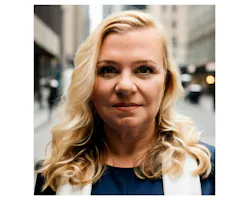
Ines Dahne-Steuber is Vice President and General Manager of Kidney Care at Quest Diagnostics. Most recently, Ines served as Chief Operating Officer for Guardant Health. Prior to that, she served as SVP of Operational Excellence and President of Spectra Labs for Fresenius Medical Care. Ines previously worked at Quest Diagnostics from 2005-2015 in several roles, including as VP of Process Excellence and Healthcare IT. She earned bachelor’s and master’s degrees in Modern Chinese and Romance Studies from Humboldt-University in Berlin, Germany.
MLO: Dialysis patients have unique and often complex testing needs. How has Quest Diagnostics adapted its daytime operations to better support this population, and what operational changes have made the biggest impact on patient care?
Dahne-Steuber: Quest operates major clinical laboratories all over the U.S., so we are well positioned to serve patients in their local communities, wherever they live.
To best accommodate the unique needs of dialysis patients, we have chosen to perform testing at all 16 participating Quest Diagnostics labs during daytime operations so that staff can give these samples special attention without impacting other patient testing commitments. Dialysis patients have unique physiologies, which lead to more clotted samples. These clots can impact testing performance and need to be managed diligently.
Prior to our acquisition of Fresenius Medical Care’s dialysis testing assets in the U.S., Quest’s laboratory operations were primarily focused on the nighttime hours, and that continues to be the case for the vast majority of tests. Our newly expanded daytime operations for renal disease have built on our lab teams’ expertise while optimizing our existing capacity, for a better return on investment.
MLO: Minimizing blood draw volume is especially critical for dialysis patients. Can you share how your team has optimized testing protocols to use less blood while still maintaining accuracy and clinical value?
Dahne-Steuber: Quest is constantly looking for ways to improve how we provide services and make testing smarter and simpler. In the case of testing for dialysis patients, we analyzed very carefully which testing needs to be performed monthly and how this testing maps to our laboratory testing platforms. We then matched the tubes to draw with the testing platforms and identified the minimal needed volumes to avoid having to share samples. This reduced the draw volume while also allowing us to test everything required for the patient’s care quickly since the tubes can go directly on the instruments, making testing simpler and smarter.
MLO: Efficiency and sustainability are increasingly important in laboratory medicine. What innovations has Quest implemented to reduce waste and improve specimen handling in kidney care testing, and how are these changes influencing broader lab operations?
Dahne-Steuber: We have created very specific workflows in our daytime operations that allow us to easily identify kidney care testing. We developed dedicated sample bags and labels that help lab staff to track and manage dialysis patient samples. Before we fully transitioned kidney care testing to our network, over 90% of samples were shipped via commercial carrier. We have transitioned more than 93% of clinical samples to courier pickup, thus removing the need for thousands of parcels, packing materials, ice packs and samples being transported across the country every day. We are also initiating a new project to redesign our packaging materials with efficiency and sustainability in mind.
MLO: Collaboration between dialysis centers and laboratory providers is key to quality outcomes. What best practices would you recommend for dialysis providers and their laboratory partners to ensure they are working effectively?
Dahne-Steuber: Patients on dialysis require frequent testing to help ensure they are receiving the appropriate care. As we try to draw as little blood as possible so as to not impact this care, it is essential that all samples be drawn and prepared accurately. Careful adherence to pre-analytical processes is critical to avoid redraws and cancellations. We continue to jointly refine our training, education and processes to help ensure we receive quality samples. It can be especially challenging to manage samples from patients on home hemotherapy. It is important that labs, dialysis providers and patients align closely to help ensure a positive experience.
MLO: Looking ahead, what innovations in laboratory medicine do you see having the greatest impact on improving outcomes for patients with end-stage kidney disease?
Dahne-Steuber: First, prevention is the best medicine. One in seven adults in the U.S. has chronic kidney disease (CKD), and nine out of ten of those individuals are unaware of their condition. We see a critical role in helping to identify CKD early to enable care sooner so patients can start with health, not sickness. Over the past several years, investments in wellness, rather than managing diseases, has become an important priority for many of our customers – and for Quest. Our goal is to encourage people to start from health, not sickness, and much of our R&D focus is on delivering innovations that identify diseases, like CKD, in early stages when they are most likely to respond to intervention.
Through innovative relationships with providers like Whoop or Function Medicine, as well as consumer-initiated testing via questhealth.com, we aim to reach more individuals and provide insights that help manage health and wellness.
We also offer extensive, highly advanced testing to manage the key cardiometabolic comorbidities affecting kidney health so that a patient’s care team can help slow the progression of CKD before requiring dialysis.
Once a patient is on dialysis, we have the capabilities to provide testing and insights related to other health risks to allow patients on dialysis to thrive. We also support transplant testing across the care continuum, from donor matching to post-transplant follow up. And, we have added water purity testing as a new capability associated with this expansion into kidney care. Specialized water testing for dialysis machines is crucial for preventing toxins from entering the bloodstream of patients with renal failure, so this is a service we are highly focused on.
We are proud to be an end-to-end provider for all stages and needs of kidney care. We plan to continue to innovate in this space and work with our clients to provide fast, comprehensive insights that help patients to live their best and healthiest lives, making their care proactive, connected and personal.
About the Author
 Christina Wichmann