Ionized magnesium in critical care: Expanding the laboratory’s role from measurement to clinical impact

To take the test online go HERE. For more information, visit the Continuing Education tab.
LEARNING OBJECTIVES
1. Identify the physiological roles of magnesium and the clinical consequences of hypomagnesemia and hypermagnesemia.
2. Differentiate between total magnesium and ionized magnesium testing and explain their clinical relevance in critical care settings.
3. Analyze clinical case studies to determine how magnesium disturbances can affect cardiovascular, respiratory, and neuromuscular function.
4. Evaluate the role of laboratory professionals in improving patient outcomes through magnesium testing, reflex testing strategies, and interpretive reporting.
Magnesium is the fourth most abundant cation in the human body and a cofactor in hundreds of enzymatic reactions. Despite its physiologic importance in cardiovascular stability, neuromuscular transmission, and energy metabolism, magnesium remains under-recognized in routine laboratory practice. Dysmagnesemia is common in hospitalized and critically ill populations, yet magnesium testing is frequently under-requested, under-interpreted, or disconnected from clinical action, usually omitted from standard biochemistry panels and even from the complete metabolic panel in clinical settings.1,2
As laboratory professionals increasingly transition from analytical service providers to active participants in clinical decision-making,1 magnesium testing, particularly ionized magnesium (iMg), represents an opportunity to improve patient outcomes through accurate, physiologically relevant measurement and more strategic test utilization. Beyond simply generating results, laboratories are uniquely positioned to help clinicians identify high-risk patients, guide timely electrolyte assessment, and support evidence-based supplementation strategies in critical care settings. In this evolving role, magnesium testing serves not only as a diagnostic tool but also as an example of how laboratory-guided demand management can help ensure that the right test is performed at the right time to better inform patient care.
The clinical significance of dysmagnesemia is best appreciated when viewed through its real-world impact on patient care. The following clinical vignettes illustrate how both hypomagnesemia and hypermagnesemia can influence patient outcomes and why accurate assessment of magnesium status may be clinically relevant in critical care settings.
Case study 1: Hypomagnesemia associated with medication use3
A case reported by Hansen and colleagues described a 40-year-old female patient presenting with nonspecific symptoms including nausea, fatigue, and diarrhea. Initial evaluation focused on gastrointestinal causes and routine laboratory testing, but magnesium levels were not assessed. The patient was admitted for acute renal failure, subsequently experienced loss of consciousness and required hospital admission before magnesium deficiency was identified as the underlying cause. She was discharged on day 14 with a short course of oral magnesium supplements but needed to be readmitted three months later, with another episode of hypomagnesemia.
Further investigation revealed chronic use of proton pump inhibitors (PPIs), a class of medications known to impair intestinal magnesium absorption. Prolonged PPI therapy has been associated with clinically significant hypomagnesemia, sometimes presenting with neuromuscular irritability, electrolyte disturbances, or cardiac arrhythmias. Because symptoms of magnesium deficiency are often nonspecific, the diagnosis may be delayed unless magnesium testing is included early in the diagnostic workup.
This case illustrates how hypomagnesemia may remain undetected during routine clinical evaluation and highlights the importance of considering magnesium status, particularly in patients receiving medications known to affect magnesium homeostasis. Early assessment of magnesium levels could potentially prevent clinical deterioration and avoid readmissions.
Case study 2: Electrolyte disturbance and respiratory compromise4
Another reported case described a 42-year-old male patient who developed symptomatic hypermagnesemia associated with neuromuscular weakness and respiratory compromise in the perioperative setting for an indicated tricuspid valvuloplasty. The patient received prophylactic magnesium supplementation perioperatively and without any prior assessment of the magnesium level. He experienced progressive muscle weakness, diminished reflexes, and impaired ventilation, ultimately requiring clinical intervention to correct the electrolyte disturbance.
Magnesium’s role in neuromuscular transmission explains these manifestations. Elevated magnesium levels reduce calcium-mediated acetylcholine release and impair skeletal muscle contraction, which can weaken respiratory muscles and contribute to hypoventilation. Importantly, symptoms of dysmagnesemia, including fatigue, muscle weakness, and altered mental status, may initially appear subtle and overlap with other critical care conditions.
This case highlights the importance of recognizing magnesium disturbances as potential contributors to respiratory dysfunction. In settings where magnesium supplementation is used therapeutically, such as severe asthma exacerbations, cardiac surgery, or obstetric care, laboratory monitoring of magnesium levels may help clinicians balance therapeutic benefits with the risk of excessive magnesium exposure.
These cases demonstrate that magnesium disturbances can present with nonspecific symptoms yet have significant physiologic consequences affecting cardiovascular and respiratory function. For laboratory professionals, they underscore the importance of accurate and timely assessment of magnesium status. While total magnesium testing remains widely used, increasing attention is being given to ionized magnesium, the biologically active fraction, which may provide additional clinical insight in critical care settings where rapid physiologic changes are common.
Magnesium physiology: Why ionized magnesium matters
Most of the body’s magnesium is found intracellularly in bone and soft tissue. Of the extracellular portion, 55–70% circulates as free, ionized magnesium (iMg), while the remainder is bound to proteins or complexed with anions.1
Total serum magnesium is widely available and sufficient for many routine clinical applications. However, total magnesium may not reliably reflect biologically active magnesium in conditions involving the following:
- Acid-base disturbances
- Hypoalbuminemia
- Major surgery
- Critical illness
- Rapid shifts in plasma protein binding
In these contexts, the ionized fraction may better reflect the magnesium available for electrophysiologic and enzymatic processes.5 Ion-selective electrode technology allows measurement of iMg at the point of care in whole blood, plasma, or serum, enabling rapid assessment in time-sensitive settings and supporting timely clinical decision-making.6
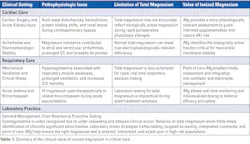
Ionized magnesium in cardiac care
Cardiac surgery and acute kidney injury
Magnesium is commonly supplemented in patients undergoing cardiac surgeries, especially those involving cardiopulmonary bypass. Magnesium elimination is tightly controlled by the kidneys to ensure homeostasis. Therefore, patients with renal insufficiency are at increased risk of abnormal levels of magnesium in the blood.
Magnesium plays a dual and complex role in cardiac surgery. Preoperative hypomagnesemia has been associated with increased postoperative acute kidney injury (AKI). In a large cohort study of 9,766 cardiac surgery patients, those in the lowest quartile of preoperative magnesium had a 1.53-fold higher risk of postoperative AKI compared to the highest quartile.7 Preoperative hypomagnesemia was also independently associated with AKI requiring dialysis for resolution.7
At the same time, indiscriminate magnesium supplementation may also pose risk. A multicenter study demonstrated that higher early postoperative serum magnesium levels were associated with increased AKI risk, with an adjusted odds ratio of 1.46 per 1 mg/dL increase.8
These findings underscore a critical principle: magnesium management in cardiac surgery should not be reflexive, it should be informed to optimize patient outcomes.
Given the acid-base and protein shifts common during cardiopulmonary bypass, measurement of iMg may provide a more physiologically relevant assessment of magnesium status than total magnesium alone.9
Arrhythmias and electrophysiologic stability
Magnesium is essential for myocardial membrane stability. Hypomagnesemia is associated with the following:10,11
- Atrial and ventricular arrhythmias
- Prolonged PR and QT intervals
- Increased susceptibility to torsades de pointes
Magnesium supplementation is routinely used in cardiac surgery to reduce postoperative arrhythmias,12 yet the variability in magnesium pharmacokinetics across patients suggests value in individualized monitoring rather than empiric dosing.
From a laboratory perspective, incorporating iMg measurement into cardiac surgery workflows may allow the following:
- Identification of true magnesium depletion despite normal total levels
- Prevention of overcorrection in patients with impaired renal clearance
- More precise perioperative electrolyte management
Ionized magnesium in respiratory care
Magnesium influences bronchial smooth muscle tone, neuromuscular transmission, and inflammatory pathways. Hypomagnesemia may contribute to bronchospasm, respiratory muscle weakness, and prolonged ventilator dependence.
Mechanical ventilation and critical illness
In ICU populations, hypomagnesemia has been associated with the following:13
- Increased mortality
- Higher rates of mechanical ventilation
- Longer ICU stays
Respiratory therapists and intensivists frequently rely on blood gas analyzers for rapid decision-making. When iMg is available on these platforms, magnesium status can be integrated into ventilator management and electrolyte correction strategies in real time.
Acute asthma and bronchospasm
Intravenous magnesium sulfate is used in moderate-to-severe asthma exacerbations. Several studies have evaluated IV magnesium as an adjunctive treatment in children with acute asthma. Magnesium supplementation in these patients has been shown to reduce the need for hospitalization by as much as 70%.14-18
A common side effect of empiric supplementation in this patient population is hypotension and clinical trials over time have tested different regimens of IV magnesium, ranging from 25mg/kg over 20 minutes to 75mg/kg over 20 minutes with varying outcomes. Consequently, no consensus currently exists regarding the optimal IV magnesium regimen in these patients, thereby highlighting the opportunity for individualized supplementation.
Given the impracticality of laboratory-based testing for total serum magnesium with treatment durations under an hour, point-of-care ionized magnesium provides a unique opportunity to set iMg-based therapeutic thresholds in these patients.
For laboratory professionals, collaboration with respiratory and critical care teams presents an opportunity to:
- Educate clinicians on the physiologic relevance of iMg
- Align magnesium testing with ventilator weaning protocols
- Integrate magnesium interpretation into arterial blood gas reporting
Demand management: Moving from reactive to proactive testing
Magnesium is often described as a “forgotten electrolyte.” Under-requesting remains a larger problem than overuse.
The evolution of laboratory medicine from analytical processor to clinical decision hub requires attention to both pre-analytical (test selection) and post-analytical (result utilization) phases. Salinas et al. describe demand management (DM) and result management (RM) strategies that significantly improved identification and treatment of hypomagnesemia.1
Demand management interventions
Examples of automated laboratory-based interventions include the following:
- Reflex magnesium testing when hypocalcemia or hypokalemia is detected
- Addition of magnesium testing in patients with diabetes, hypertension, advanced age, or chronic proton pump inhibitor therapy
- Targeted screening in emergency department populations
In emergency department patients, reflex magnesium testing triggered by hypocalcemia reduced 30-day readmission rates from 25% to 13%, a striking illustration of laboratory-driven clinical impact.1
Such interventions are particularly relevant in cardiac and respiratory populations where electrolyte abnormalities often coexist and correction of potassium or calcium is incomplete without magnesium repletion.
Result management interventions
Laboratory professionals can also improve post-analytical action by incorporating interpretive comments when clinically significant hypomagnesemia is detected.
In one intervention, automated comments prompting clinicians to consider treatment when magnesium <0.6 mmol/L increased appropriate treatment rates from 15% to 75%.1
These strategies demonstrate that the laboratory’s impact extends beyond measurement and includes helping ensure that relevant tests are both ordered and acted upon appropriately.
Analytical considerations for ionized magnesium
While total magnesium is typically measured via colorimetric methods on automated chemistry analyzers, ionized magnesium requires ion-selective electrode technology.
Analytical considerations include the following:
- Avoidance of hemolysis
- Awareness of acid-base status (which alters ionization fraction)
- Clear communication of reference intervals
- Education of clinicians on differences between total and ionized values
Biological variation data indicate that desirable imprecision for total magnesium should be <1.8%, with total allowable error around 4.8%.1, 14, 15 Similar performance expectations should guide iMg implementation.
Laboratories considering adoption of iMg testing should evaluate the following:
- Clinical demand in cardiac surgery and ICU populations
- Integration into blood gas platforms
- Alignment with institutional electrolyte management protocols
The Laboratory as a Clinical Partner
Cardiac and respiratory care are increasingly protocol-driven, data-intensive disciplines. Magnesium, particularly its ionized fraction, intersects directly with:
- Arrhythmia prevention
- AKI risk mitigation
- Bronchospasm management
- Ventilator liberation
- Electrolyte correction algorithms
Laboratory professionals can contribute meaningfully through the following:
- Educating clinicians on the physiological relevance of ionized magnesium.
- Developing reflex and demand management strategies in high-risk populations.
- Implementing interpretive reporting that supports appropriate treatment.
- Monitoring outcome indicators such as readmissions, electrolyte correction rates, and ICU length of stay.
The “brain-to-brain loop” concept of laboratory medicine emphasizes that optimal care depends not just on accurate measurement, but on appropriate test selection and effective action. Magnesium testing, particularly in critical care, exemplifies this principle.
Conclusion
Magnesium disturbances are common in hospitalized and critically ill patients yet frequently remain underrecognized in clinical practice. As illustrated by the case examples presented earlier, both hypomagnesemia and hypermagnesemia can produce nonspecific symptoms that may delay diagnosis until significant physiological consequences occur. These disturbances can influence cardiovascular stability, neuromuscular function, and respiratory performance; clinical domains where timely recognition of electrolyte abnormalities is essential.
Increasing evidence suggests that the ionized fraction of magnesium represents the physiologically active component most relevant to cellular function. In complex clinical environments such as cardiac surgery and respiratory critical care, physiological changes, acid-base disturbances, and shifts in protein binding may alter the relationship between total and ionized magnesium. Under these conditions, reliance on total magnesium alone may fail to accurately reflect biologically active magnesium status.
For laboratory professionals, these insights reinforce an evolving role that extends beyond analytical measurement. Through thoughtful test selection, reflex testing strategies, interpretive reporting, and collaboration with clinical teams, the laboratory can help ensure that magnesium abnormalities are recognized and appropriately addressed. Demand management strategies such as targeted magnesium testing in high-risk populations or reflex testing in the presence of related electrolyte abnormalities, have already demonstrated their potential to improve diagnosis and treatment of dysmagnesemia.
As laboratory medicine continues to move toward greater integration with clinical decision-making, magnesium testing represents an opportunity to translate laboratory data into meaningful improvements in patient care. Incorporating physiologically relevant measurements, such as ionized magnesium where appropriate, may help clinicians better understand electrolyte disturbances in complex clinical settings and support more individualized patient management.
Ultimately, the goal is to ensure that the right test is performed at the right time and that results are used effectively to guide patient care. In doing so, magnesium testing presents laboratory professionals with an opportunity not merely to measure magnesium, but to lead in advancing patient-centered care.
References
- Salinas M, López-Garrigós M, Flores E, Leiva-Salinas C. Improving diagnosis and treatment of hypomagnesemia. Clin Chem Lab Med. 2023;62(2):234-248. doi:10.1515/cclm-2023-0537.
- Jacobson SA. Clinical Laboratory Medicine for Mental Health Professionals. American Psychiatric Association Publishing; 2017.
- Hansen BA, Bruserud Ø. Hypomagnesemia as a potentially life-threatening adverse effect of omeprazole. Oxf Med Case Reports. 2016;2016(7):147-9. doi:10.1093/omcr/omw062.
- Premkumar CR, Parthasarathy R, Kumar S, Vijaykumar S. Postoperative respiratory depression caused by iatrogenic hypermagnesaemia. Anaesth Rep. 2022;10(1):e12154. doi:10.1002/anr3.12154.
- Grzych G, Patrice M, Aghiles H, et al. A-095 deciphering the physiological distribution and clinical relevance of magnesium forms in a large patient cohort. Clin Chem. 2025;71(Supplement_1). doi:10.1093/clinchem/hvaf086.094.
- Stat Profile Prime Plus Analyzer Instructions for Use Manual. Nova Biomedical. Accessed May 12, 2026. https://novabiomedicaldocs.com/wp-content/uploads/filr/26647/LPN_60278_E_Prime_Plus_IFU_instructions.pdf.
- Koh HB, Jung CY, Kim HW, et al. Preoperative ionized magnesium levels and risk of acute kidney injury after cardiac surgery. Am J Kidney Dis. 2022;80(5):629-637.e1. doi:10.1053/j.ajkd.2022.03.004.
- Xiong C, Shi S, Cao L, et al. Association of early postoperative serum magnesium with acute kidney injury after cardiac surgery. Ren Fail. 2023;45(1):2170244. doi:10.1080/0886022X.2023.2170244.
- 2024 JSMP/JATS/JSCVS/JSCVA/JaSECT guidelines on myocardial protection in open heart surgery. 2024:174–175. Accessed May 12, 2026. https://jsmp.jp/.
- Wilkes NJ, Mallett SV, Peachey T, Di Salvo C, Walesby R. Correction of ionized plasma magnesium during cardiopulmonary bypass reduces the risk of postoperative cardiac arrhythmia. Anesth Analg. 2002;95(4):828-34, table of contents. doi:10.1097/00000539-200210000-00008.
- Booth JV, Phillips-Bute B, McCants CB, et al. Low serum magnesium level predicts major adverse cardiac events after coronary artery bypass graft surgery. Am Heart J. 2003;145(6):1108-13. doi:10.1016/S0002-8703(03)00077-2.
- Fairley JL, Zhang L, Glassford NJ, Bellomo R. Magnesium status and magnesium therapy in cardiac surgery: A systematic review and meta-analysis focusing on arrhythmia prevention. J Crit Care. 2017;42:69-77. doi:10.1016/j.jcrc.2017.05.038.
- Cheungpasitporn W, Thongprayoon C, Qian Q. Dysmagnesemia in hospitalized patients: Prevalence and prognostic importance. Mayo Clin Proc. 2015;90(8):1001-10. doi:10.1016/j.mayocp.2015.04.023.
- Johnson MD, Shihabuddin BS, Barney BJ, et al. Intravenous magnesium: Prompt use for asthma in children treated in the emergency department (IMPACT-ED), a pilot randomized trial. Acad Emerg Med. 2025;32(8):903-915. doi:10.1111/acem.70006.
- Irazuzta JE, Chiriboga N. Magnesium sulfate infusion for acute asthma in the emergency department. J Pediatr (Rio J). 2017;93 Suppl 1:19-25. doi:10.1016/j.jped.2017.06.002.
- Scarfone RJ, Loiselle JM, Joffe MD, et al. A randomized trial of magnesium in the emergency department treatment of children with asthma. Ann Emerg Med. 2000;36(6):572-8. doi:10.1067/mem.2000.111060.
- Ciarallo L, Brousseau D, Reinert S. Higher-dose intravenous magnesium therapy for children with moderate to severe acute asthma. Arch Pediatr Adolesc Med. 2000;154(10):979-83. doi:10.1001/archpedi.154.10.979.
- Ciarallo L, Sauer AH, Shannon MW. Intravenous magnesium therapy for moderate to severe pediatric asthma: results of a randomized, placebo-controlled trial. J Pediatr. 1996;129(6):809-14. doi:10.1016/s0022-3476(96)70023-9.
- Unity Peer Reporting Program. Bio-Rad. Accessed May 12, 2026. https://www.bio-rad.com/en-us/product/unity-peer-reporting-program?ID=2f4de703-321e-4d4e-b378-5bfcb4f30cb3.
- Quality requirements. Westgard QC. Accessed May 12, 2026. https://westgard.com/clia-and-quality-regulation-requirements/quality-requirements.html.
To take the test online go HERE. For more information, visit the Continuing Education tab.
About the Author
 Martin Ekiti, MD, MPHc
Martin Ekiti, MD, MPHc
Martin Ekiti, MD, MPHc is the Medical Officer and Director of Medical and Scientific Affairs – North America at Nova Biomedical. He is a Family Physician, and an MPH Candidate at the Harvard University T.H. Chan School of Public Health.